Helen Tandy, Founding Director, Eco Communities
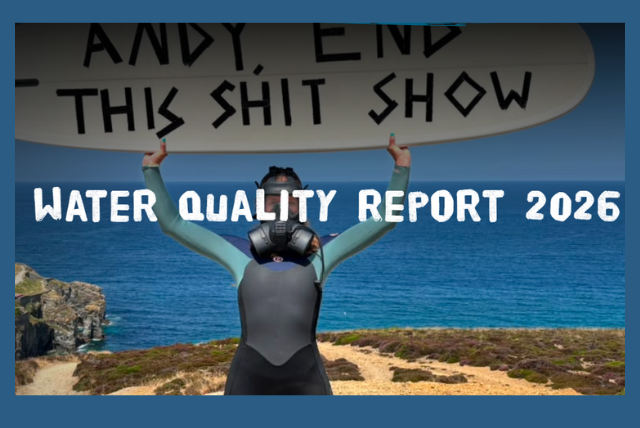
Surfers Against Sewage has just published its 2026 Water Quality Report, and the findings are stark: no one in the UK is safe from sewage pollution, not even in the places officially designated for bathing.
As Chester’s Surfers Against Sewage rep, I wanted to share what the report found and what it means for us here on the Dee. Earlier this year we celebrated the River Dee at Sandy Lane becoming an official bathing water. This report is a reminder of why that win matters, and why the work doesn’t stop there.
What the report found
The report is SAS’s annual snapshot of sewage pollution across all four nations of the UK. Its headline figures for 2025:
|
Finding |
Figure |
|---|---|
| Sewage dumps across the UK in 2025 | 500,554 |
| Total duration of those dumps | Over 3 million hours, equal to 342 years of continuous sewage |
| Hours of sewage dumped into designated bathing waters | 191,000 |
| Sickness reports made to SAS since 2019 by people ill after being in the water | 9,361 |
| Discharges in England reported more than an hour late, first half of 2026 |
Around 50,000 |
That last figure is new this year. Since February 2025, water companies have had a legal duty under the Environment Act to publish spill data within an hour. The Times reported this week that Southern Water, South West Water and Yorkshire Water top the list of firms missing that deadline. Late data means swimmers, paddlers and families can’t make a safe choice before they go in.
The sickness figure is also likely to be an undercount. Most people who fall ill after a swim never report it.
What it means for the Dee
Winning bathing water status for Sandy Lane took years. Our first application was turned down in 2024, and the community kept pushing until we got there. That status matters because it brings regular testing, public information for swimmers and pressure to find and fix pollution sources.
But designation is a starting point, not a guarantee. It doesn’t mean the water is clean or safe on any given day. The 191,000 hours of sewage dumped into designated bathing waters last year show exactly that.
So for swimmers, paddlers, rowers and families using the Dee, two habits are worth building:
- Check before you go in. Use the SAS Safer Seas & Rivers Service app, or Welsh Water’s storm overflow map, for recent discharge alerts.
- Report it if you get ill. Every sickness report to SAS adds to the evidence that forces change.
UK Live Sewage Map – Surfers Against Sewage • Data HQ
What you can do this month
The report’s call to action is the Clean the Bill campaign. From 22 to 26 October, SAS is running a national Mass Lobby, with communities meeting their MPs at rivers and beaches across the country. It’s a chance to bring local evidence and experience into the debate on the Clean Water Bill, which includes proposals to protect public health, the environment and people who use our waters.
- Write to your MP and ask them to back a stronger Clean Water Bill. MP Sam Dixon has been a huge supporter.
- Share the report on your own channels. The more people see it, the more pressure builds.
Clean rivers are worth fighting for. We’ve already shown on the Dee that local people, working together, can change things.
Sources
- Surfers Against Sewage, Water Quality Report 2026
- Clean the Bill Mass Lobby events
- Cheshire West and Chester Council: 2024 bathing water decision
- Chester Triathlon Club: open water swimming on the Dee
- The Times Environment newsletter, 13 October 2026