Eco Communities are proud members of The Climate Coalition, alongside many much larger organisations — from the National Trust and the RSPB to WWF and the Women’s Institute. We’ve been involved in two of the Coalition’s flagship campaigns for many years: the annual Show the Love campaign each February, and Great Big Green Week each September. Being part of that wider network is exactly why last week’s debate in Westminster Hall matters to us as much as it does to organisations many times our size.
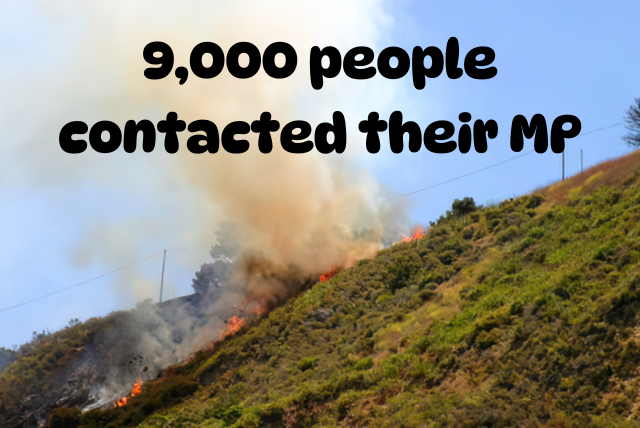
On Thursday 3rd Septemer, Westminster Hall was packed for a debate on biodiversity loss, ecosystem collapse and national security. It happened because more than 9,000 people across the Climate Coalition and its member organisations took the time to contact their MP beforehand.
MPs from across the political spectrum showed up and spoke with real conviction. Nature security is national security, one MP argued. Effective action on nature would mean cheaper energy, better health, a richer economy and a safer world, said another. There were pointed questions too, about who owns the risk of ecological collapse, and when a cross-government action plan will follow.
It’s a useful reminder of something we’ve believed for the twenty-plus years we’ve been campaigning locally here in Cheshire: small, local, persistent action adds up to real pressure on the people who make the big decisions.
The local parallel
We’ve seen this pattern play out on our own patch. The River Dee’s bathing water designation didn’t happen because one campaign or one letter tipped the balance, it happened because residents, community groups and local advocates kept raising water quality, kept documenting problems, and kept showing up. The Seventh Carbon Budget passing into law is a similar story at national scale: years of pressure from thousands of local groups like ours, all pointing in the same direction.
None of this work is glamorous. It’s newsletters, refill hubs, rain gardens, and — yes — emails to MPs. But last week’s debate is proof that it moves the needle. 9,000 emails got a room full of politicians talking seriously about biodiversity as a security issue, not a nice-to-have.
A Chester voice in the room
One of the MPs who spoke was our own Samantha Dixon, MP for Chester North and Neston. She used her contribution to highlight Chester Zoo’s conservation work as an example of the UK’s world-leading expertise in species conservation and habitat restoration, including the zoo’s programme to reintroduce more than 100,000 critically endangered greater Bermuda land snails to the wild, after a small surviving population was discovered surviving in an air conditioning unit. She asked the Minister to confirm that supporting the UK’s conservation sector is vital to the country’s long-term security and climate resilience.
It’s a good reminder that the debate wasn’t an abstract, Westminster-only conversation, it had a distinctly local voice in it, making the case for an organisation many of us walk past on a Chester bus route. The Shadow DEFRA Minister even referenced her Chester Zoo point directly in his closing remarks, which shows how a strong, specific local example can travel further than people expect in a national debate.
What you can do
If you want to add your voice, it takes five minutes:
- Thank your MP if they spoke or showed up to the debate, and ask them to back the Climate Coalition’s policy asks. There’s a ready-to-adapt letter template to make this easy.
- Have your say in the National Conversation survey on climate, wildlife and community issues — the responses feed directly into policy recommendations for government.
Local action and national policy aren’t separate tracks. They’re the same track. Every refill we help set up, every rain garden we plant, every letter someone sends to their MP — it’s all part of the same push. Thursday’s debate is a good reminder that it’s working.