Published in support of Plastic Free July
Helen Tandy, Founding Director
July is here, and with it comes one of the most powerful global movements for change: Plastic Free July. Every year, millions of people around the world take the challenge, cutting out single-use plastic for a month, building habits that often last a lifetime. Whether you’re attempting it for the first time or looking to go a step further, you’re in the right place.
I want to be upfront with you: I’m not perfect. I never claim to be. But I’ve been quietly chipping away at single-use plastic in my home for over two decades, and I’ve learned a lot along the way — including what’s easy, what takes more effort, and why the journey matters more than a flawless track record.
The kitchen roll that never was
For around 20 years, we haven’t had kitchen roll (not plastic but this was in my zero waste challenges) or cling film.
Kitchen roll- I keep a stack of cloths, always within reach for spills, wiping down surfaces, whatever the kitchen throws at us. They go in the wash and come back round again. For about ten of those years, my husband used to cheerfully tell anyone who’d listen that kitchen roll simply wasn’t allowed at home. He wasn’t wrong.
Cling film – Reusable containers with lids, a plate over a bowl, and wax wraps for everything else. Once you stop reaching for the cling film, you stop missing it almost immediately. And speaking of wax wraps, more on those below, including how you can make your own.
It sounds like a small thing. It is a small thing. But small things, multiplied over twenty years, add up to a lot of rolls that never ended up in landfill/incineration.
Why recycling alone isn’t the answer
Before I get into more swaps, it’s worth saying something about recycling, because I think a lot of people assume that if something goes in the recycling bin, the problem is solved. It isn’t. It’s estimated that only around 9% of all the plastic ever manufactured has actually been recycled. Much of what we diligently sort and rinse winds up burned or sent to landfill anyway, because demand for products made from recycled plastic simply isn’t high enough to absorb it all.
That’s why the focus for me has always been on using less in the first place — refill, reuse, refuse — rather than recycling as a first resort.
The cleaning cupboard, reinvented
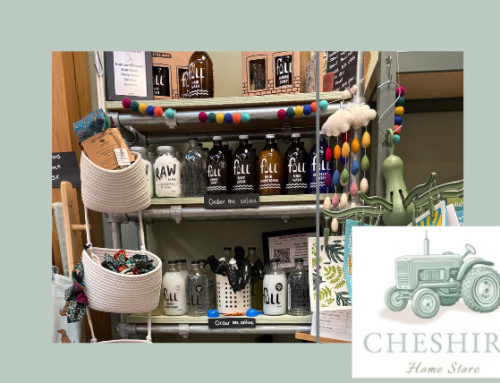
Plastic-free cleaning and laundry products have been part of my routine for many years. When Chester had its fantastic zero waste shop, I’d refill my bottles there, a proper, local, closed-loop system. When that closed, I moved to a subscription service. It wasn’t perfect, some products arrived in tetra pack containers with their fair share of cardboard, but it was still considerably better than buying everything in new single-use plastic each time.
Personal care took its own journey. I switched from shower gel to soap bars, and from plastic bottles of shampoo and conditioner to pastes that came in returnable glass containers. Bar soap is worth a special mention here, not only does it come without plastic packaging, but liquid soap actually carries around a 25% larger carbon footprint than bar soap, and a bar generally lasts longer and costs less per use. It’s a win on every front.
It felt like the ideal solution, until the stockist pulled out of the refill model, finding that too many returned glass jars were arriving damaged to make it viable. That moment of frustration planted a seed.
If a commercial model couldn’t sustain it, could a community one?
That question was part of what led to the Full Circle Refill Hub network, which Eco Communities now runs from my garage with collection hubs at Hoole Community Centre, Helsby Library, and Neston Community Youth Centre. It’s not a perfect system either, nothing is — but it’s a real, local, accessible way for people to refill cleaning and personal care products without buying new plastic each time. Of course I use everything we stock, no more soap bars – hubby was happy to move back to liquid body wash.
The market years — and what I miss
Some of my best plastic-free shopping happened when Just Footprints was trading in the old Chester Market. Grains, rice, liquid cleaners, soap bars, loose veg, bread, even some meat for my husband, all under one roof, almost entirely without packaging. It was the kind of shopping that felt good in a very straightforward way.
Hoole Food Market is still a regular visit, and I love it. It’s a smaller space, and I’ll be honest — I’ve resorted to buying some things like rice in larger bulk quantities rather than truly loose. It’s a compromise I’m working on. Buying in bulk is still much better than single-serve packaging, but the goal is always to get closer to loose and local. I’m going to make more effort to source from Hoole, and I’d encourage you to do the same wherever you have a local market or independent retailer nearby.
The sneaky ones you might not have thought of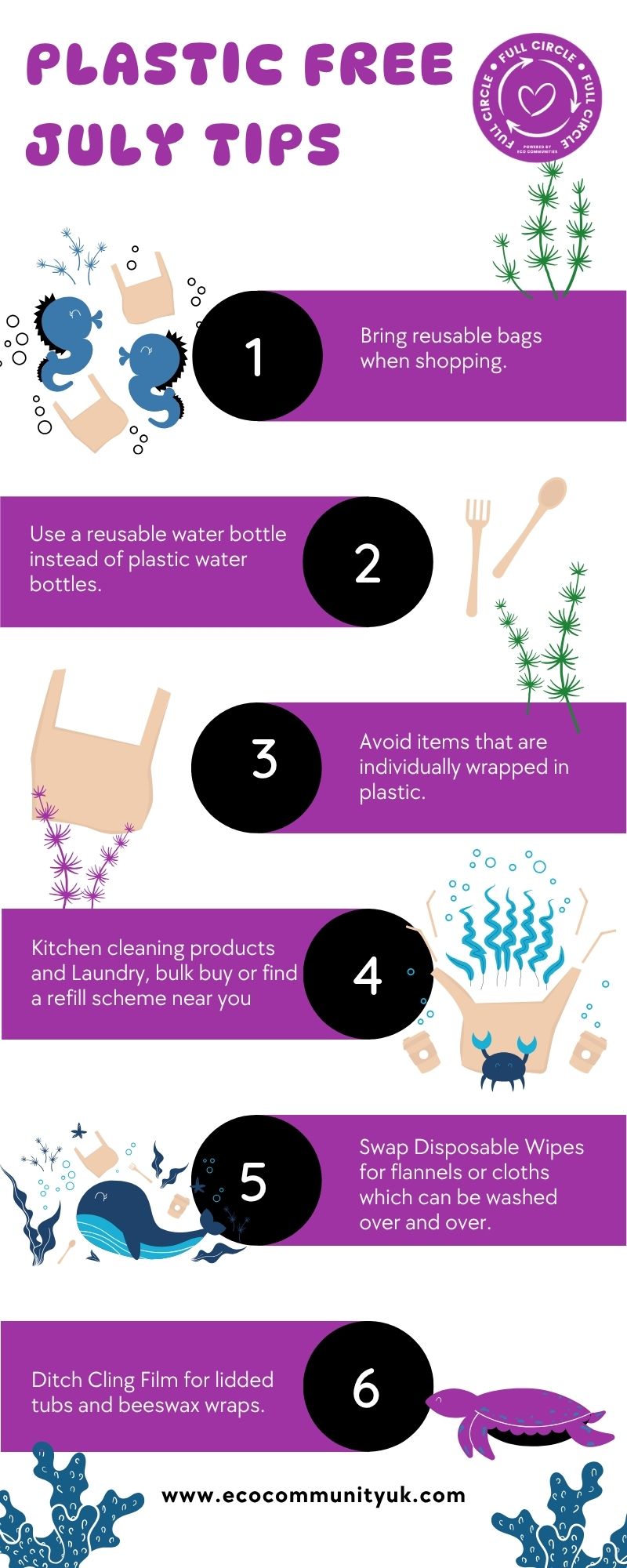
Single-use plastic doesn’t always look like a bottle or a wrapper. A couple of hidden sources worth knowing about:
Your clothes might be releasing plastic every time you wash them. Synthetic fabrics like polyester and nylon are essentially plastic, and when washed, they shed tiny microfibres that are too small to be caught by water treatment systems and end up straight in our rivers and seas. A polyester fleece can shed close to a million of these microfibres in a single wash. Shorter wash cycles, washing at lower temperatures, and specialist microfibre-catching laundry bags all help, and it’s worth thinking twice before buying new synthetic clothing.
As Chester’s Surfers Against Sewage representative this one hits close to home. The microplastics entering our waterways from our own washing machines are part of the same story as the water quality issues we campaign on along the River Dee. It’s all connected.
Teabags are another one. Many still contain plastic in their fibres or sealing, worth checking your brand.
Toothpaste tube (can now at least be added to your recycling) but you could try toothpaste tabs. ( See Parla)
Cleaning products – I just use one our All Purpose Cleaner (so take back I use everything -not yet tried the Everything Clean which can be diluted for different jobs)
Laundry – no more plastic coated pods for me – Fill Laundry Liquid and Fabric Conditioner with Neroli – we also not stock fragrance free.
Hair – I tried shampoo bars which soe love just didn’t get on with them, loved the paste which could be returned for refill but of course now our Fill Hair Wash and Hair Conditioner. No nasty chemicals and I find I wash my hair less often in comparison to supermarket buys.
Shower Gels– yes moved from soap bars as had to use our Body Wash if we are selling it with fig leaf.
Disposable Face Wipes – never really used this, the odd off grid camping purchase. I am using a face wash in plastic just now (holiday airport purchase as forgot stuff) I have lots of flannels though. I don’t use it loads and so it looks like I might get 12 months from it/or 10. I mostly use our Micellar Water (as recommended by Emily) with a Facial Pad which get washed. I have had them for years but just received stock of them and so might treat myself to a new batch.
I put the recycling our this morning – very little plastic. Some cordial bottles, hubby like orange cordial where I am more of a tap water drinker. But some tubs and trays from meat (hubby) and strawberries.
More flexible plastic than hard plastic, I do use my Wholly Shrink to take control of this and drop it off at Aldi. Bread bags, some veg bags, sweet wrappers !!!!! I need to work on this one.
Just one thing
If Plastic Free July feels overwhelming, please don’t let that stop you. Pick one thing. Ditch the cling film. Make a wax wrap. Refill instead of rebuy. One change, sustained, is worth infinitely more than a perfect month followed by old habits.
We’re all on a journey. I’ve been on mine for over twenty years and I’m still learning, still finding the gaps, still making compromises. Come and find yours.
I tried many of these changes as a challenge many years ago and now they are habit.
Give it a go and tell us how you get on..
Check our out Full Circle Shop – lots of newly listed items…
- Full Bottles 500ml
- Refill 500ml
- Face and Body Eco items
- Kitchen Eco items
- Bags, gifts and jewellery (mostly for when we do markets etc.)
- Plastic Free Party
Follow us on Instagram @ecocommunitiesuk and @plasticfreenorthener.
Make your own beeswax wraps — and get a kit from us
Want to try it but not sure where to start? We are going to create some beeswax wrap kits, containing fabric, beeswax, and full instructions — available for a donation at our Full Circle Refill Hubs. A lovely activity to do with children, or just a satisfying afternoon project for yourself. Email me if you want one….
One of the most satisfying plastic-free swaps you can make is also one of the most enjoyable to do yourself: beeswax wraps. They’re reusable, compostable, and genuinely work well for wrapping food, covering bowls, and keeping things fresh without a scrap of plastic in sight.
We use the grated wax and iron method, which is simple, quick, and requires no special equipment beyond what most people already have at home.
You will need:
- 100% cotton fabric, cut to your chosen size (pre-washed)
- Beeswax pellets or a block to grate
- A cheese grater
- Baking paper
- A domestic iron
How to make them:
- Preheat your iron to a medium-low setting (wool/synthetic — no steam).
- Lay a sheet of baking paper on your ironing board, then place your fabric on top.
- Grate beeswax evenly over the fabric — you don’t need much, just a light, even coverage.
- Lay a second sheet of baking paper over the top to protect your iron.
- Press the iron gently over the baking paper in slow, circular movements. Watch the wax melt and spread through the fabric.
- Carefully peel back the top baking paper and lift your wrap — wave it in the air for a few seconds to set, and it’s done.
The warmth of your hands activates the wrap when you’re using it, moulding it around food or containers. Wash in cool water with a little washing up liquid, leave to air dry, and it’ll last for up to a year or more with good care.