Helen Tandy, Founding Director, Eco Communities
At our last nights People Planet Pint (wrote it the next day but not been well and so late posting) gathering in Chester, we had one of those conversations that starts with a simple question —
“why does sewage end up in the River Dee when it rains?” — and goes somewhere really worthwhile.
We were joined by Rob Hirst from The River Dee Trust, and the discussion covered everything from the mechanics of combined sewer overflows to what communities and homeowners can actually do closer to home. As Surfers Against Sewage‘s Chester representative, this sits right at the heart of what I care about, and I left the evening feeling genuinely energised.
Then this morning, a post on LinkedIn stopped me in my tracks. A rain garden installed in a driveway, a narrow planted strip running underneath the car had gone viral on Instagram, with hundreds of comments from people who’d never heard of such a thing but immediately wanted one. It felt like exactly the right moment to write this.
So why does sewage end up in our rivers?
Many older UK towns and cities, including parts of Chester have what’s called a combined sewer system, where rainwater runoff and foul sewage (from toilets, sinks and so on) share the same pipes. In dry weather, this works fine: everything flows to the treatment works. But in heavy rainfall, the volume of water surging into the system can overwhelm capacity. Rather than backing up into homes and streets, it’s released — untreated — into rivers and waterways through Combined Sewer Overflows (CSOs).
This is legal. It’s also deeply problematic. The River Dee — our river — is affected by this. It’s one of the reasons why campaigning for bathing water status on the Dee matters so much, because it would trigger greater scrutiny and accountability around these discharges.
Water companies absolutely need to invest more in infrastructure. But while we push for that, there’s something practical we can do at home.
What are Household SuDS?
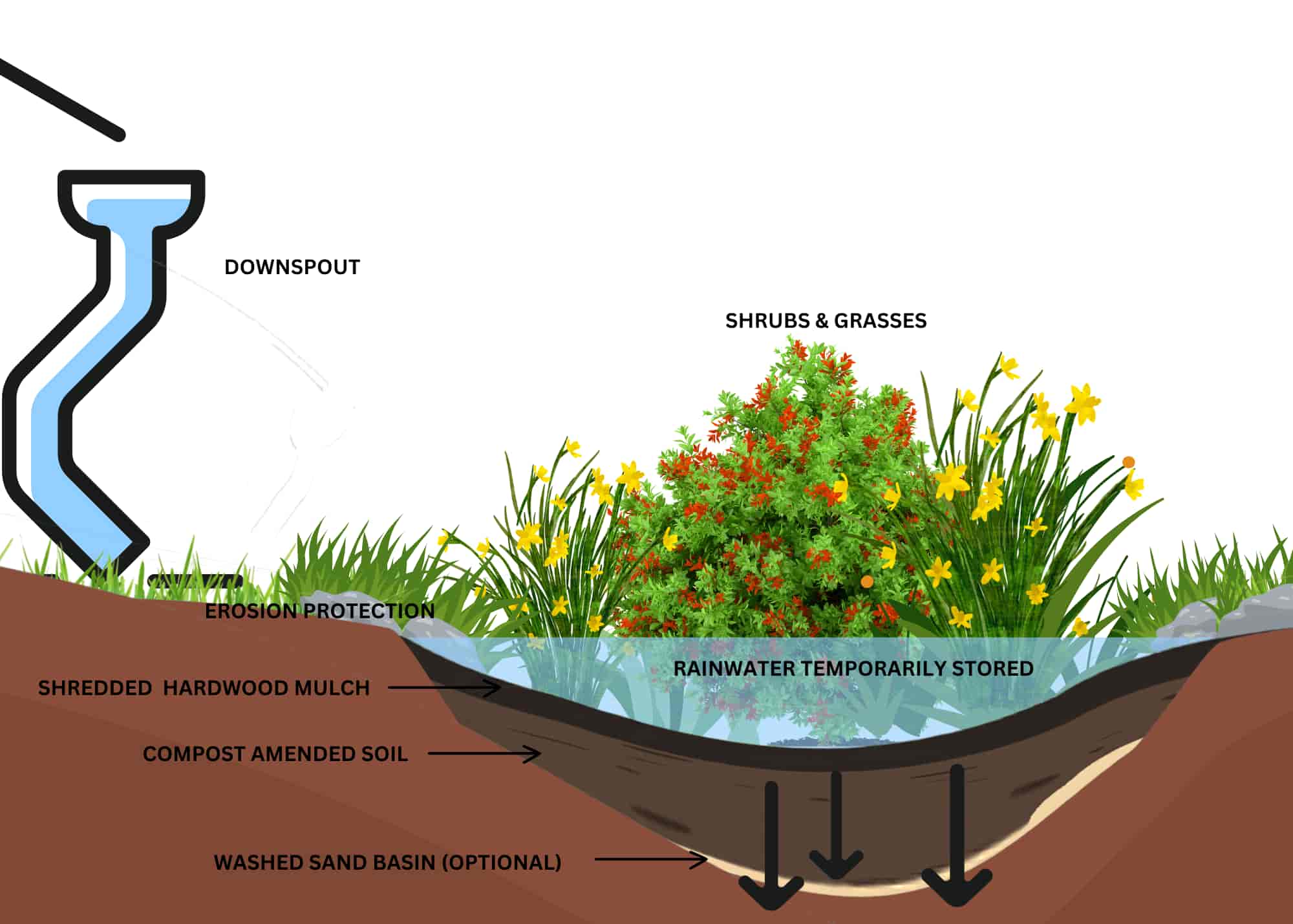
Sustainable Drainage Systems — SuDS, manage rainwater naturally, where it falls. Instead of funnelling runoff straight into the sewer, they allow water to soak into the ground, evaporate slowly,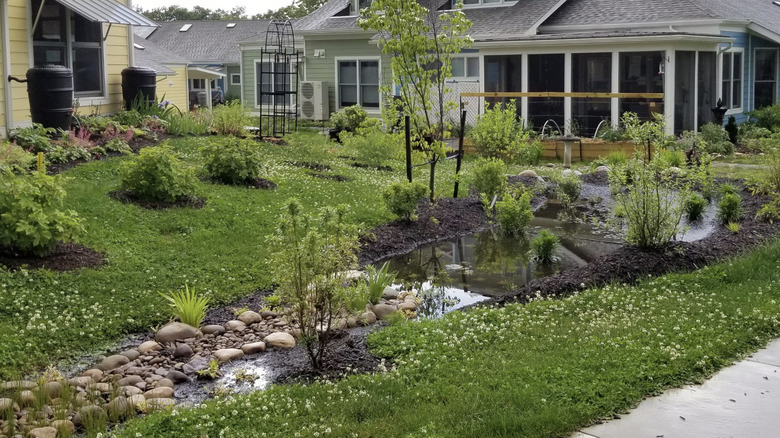 or be captured and reused. Less water in the sewer means less risk of overflow, and less sewage reaching our rivers.
Here are the most accessible options for homeowners:
Rain Gardens
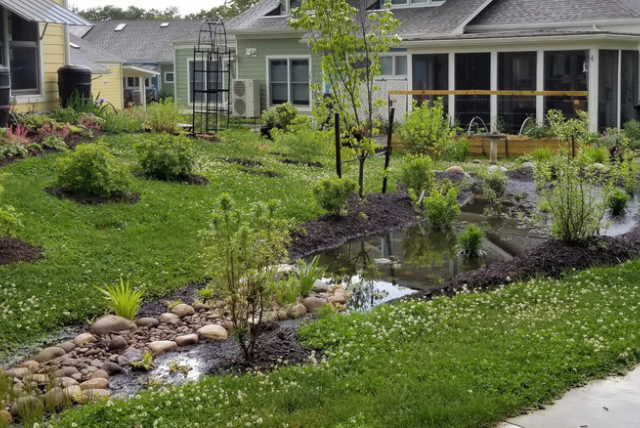
Shallow, planted depressions that capture runoff from roofs or driveways and allow it to pool temporarily before being absorbed by plants. They can be surprisingly small and beautiful, and yes, you can install one as a strip in your driveway, exactly as that viral post showed. Moisture-loving plants do the work; you get a wildlife habitat as a bonus.
Raised Planter Rain Gardens
Not everyone can dig a depression into their garden — and that’s where the raised planter version comes in. Instead of excavating downwards, you build up a contained bed using timber, sleepers, stone, or reclaimed materials, filled with a free-draining soil mix. See beow for more info and how to build one – see also this business for more info – click here
Permeable Paving
Replacing a solid concrete or tarmac driveway with permeable block paving, gravel, or porous surfaces allows water to filter through into the ground rather than rushing into the drain. Under current UK planning rules, any new or replacement front driveway over five square metres must use a permeable surface or direct water to a permeable area — so if you’re planning a driveway refresh, this is already the legal expectation.
Water Butts
Simple, affordable, and underused. A water butt connected to your downpipe captures roof runoff for garden use, taking pressure off the drainage network during storms. If you have the space, multiple butts or a larger tank make a real difference.
Soakaways
An underground gravel-filled pit or purpose-built structure collects rainwater and lets it seep slowly into surrounding soil. Often used alongside other drainage measures, particularly for roof runoff.
Are there financial benefits?
Possibly, yes. In the UK, if your surface water doesn’t drain into the public sewer network, you may be eligible for a reduction on your water bill, sometimes called a surface water drainage rebate. It’s worth checking with your water company to find out whether you qualify, particularly if you’ve already made changes to your drainage.
Where can I find out more?
For guidance on what’s permitted and what standards apply, the best starting points are:
- The Flood Hub — regional flooding and drainage advice for the North West: thefloodhub.co.uk
- Cheshire West and Chester Council — local planning and drainage guidance
- The River Dee Trust — working with communities across the Dee catchment on nature-based water solutions: deetrust.org
- Surfers Against Sewage — campaigning for clean rivers and seas, with local reps in Chester: sas.org.uk
The bigger picture
Individual action isn’t a substitute for systemic change, water companies must be held to account, and investment in our ageing sewer infrastructure is long overdue. But household SuDS are one of those rare things: genuinely helpful and within reach. A rain garden in a driveway won’t save the Dee on its own. But hundreds of them across Chester and Cheshire West? That starts to add up.
If you’re curious about what might work for your property, feel free to get in touch. And if you missed last night’s People Planet Pint, we’ll be back in July with a new topic.
Follow us on Instagram: @ecocommunities_ and I am @plasticfreenorthener
How-To Guide: Build Your Own Raised SuDS Planter
Not everyone can dig a depression into their garden — and that’s where the raised planter version comes in. Instead of excavating downwards, you build up a contained bed using timber, sleepers, stone, or reclaimed materials, filled with a free-draining soil mix. A gap or channel allows water to flow in from a downpipe or hard surface, where it’s slowed, filtered through layers of soil and gravel, and gradually released.
This works particularly well for paved or concreted gardens where digging isn’t practical, front gardens where you want something that looks intentional and attractive, and anyone who wants a visible, manageable DIY project. A sleeper-edged planter filled with grasses, sedges, and moisture-tolerant perennials can look genuinely beautiful — and do real drainage work at the same time.
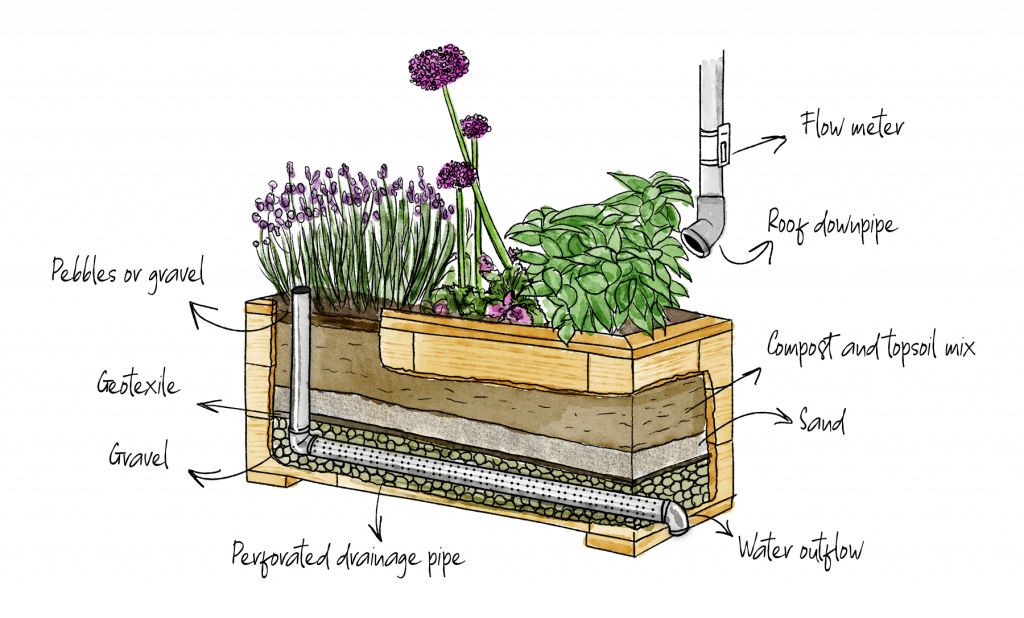
The key is in the layers. Water enters at the top, filters down through soil, then a membrane, then gravel, and exits slowly through a perforated pipe at the base — releasing back into the drainage system at a fraction of the speed it arrived. That’s what makes the difference.
A raised SuDS planter is one of the most accessible ways to manage roof runoff at home. It requires no specialist skills, works in small spaces, and can be built for well under £100 using materials from a builders’ merchant or reclaimed sources. If you are on Facebook check our Rob’s video here – CLICK LINK
How it works
Rainwater is diverted from your roof downpipe directly into the top of the planter. It filters slowly downward through a layer of soil, a geotextile membrane, and a base layer of gravel or shingle. A perforated pipe near the bottom controls the release — letting water exit gradually into the drainage network at a much slower rate than it arrived. This controlled release is what reduces pressure on the sewer during heavy storms.
What you’ll need
- A large, sturdy container — a raised wooden planter (sleepers work well), or a heavy-duty polyethylene water butt or planter
- Gravel or shingle for the base layer
- A perforated drainage pipe (available from builders’ merchants)
- Geotextile membrane (also called landscape fabric)
- Free-draining topsoil or a loam/grit mix
- Moisture-tolerant plants (see suggestions below)
- A downpipe connector or diverter kit to redirect water from your gutter
Step by step
1. Choose your location
Position the planter close to a downpipe, ideally where surface water already naturally collects. A front garden, side return, or paved courtyard all work well.
2. Prepare your container
If using timber, ensure it’s sturdy and untreated or treated with a water-safe preservative. Drill or cut an outlet hole near the base on one side for your drainage pipe.
3. Add the gravel layer
Pour a layer of shingle or gravel (around 10–15cm) into the base. This is your drainage reservoir — it holds water temporarily and allows slow seepage.
4. Lay the geotextile membrane
Place the membrane over the gravel layer, cutting it to fit. This prevents soil from washing down into the drainage layer and blocking it over time.
5. Insert the perforated pipe
Run the perforated pipe along the base before laying your membrane, with the outlet end exiting through the hole you’ve made in the container side. This connects eventually back to your existing drainage or soakaway.
6. Add soil and plants
Fill the upper portion with free-draining soil — a mix of topsoil and horticultural grit works well. Plant up with moisture-tolerant species that can handle periodic waterlogging as well as drier spells.
7. Connect your downpipe
Fit a downpipe diverter to your existing gutter downpipe and route it into the top of the planter. In very heavy rain, a diverter will automatically redirect overflow back into the original drain once the planter is full — an important safety feature.
Good plants for a SuDS planter
Choose plants that tolerate both wet and dry conditions — they’ll need to cope with feast and famine:
- Marsh marigold (Caltha palustris)
- Yellow flag iris (Iris pseudacorus)
- Purple loosestrife (Lythrum salicaria)
- Pendulous sedge (Carex pendula)
- Creeping Jenny (Lysimachia nummularia)
- Ragged robin (Lychnis flos-cuculi)
- Fleabane (Erigeron)
Native species are best — they support local pollinators and wildlife as well as managing water.
Maintenance
SuDS planters are low maintenance but not no maintenance. Clear debris from the inlet a couple of times a year, check the outlet pipe isn’t blocked, and cut back plants in autumn. The gravel layer may need refreshing every few years if drainage slows noticeably.