Helen Tandy, Founder Eco Communities
What happens when the UK’s best-known fast fashion company names itself after a high street department store? I’ve been reading Ethical Consumer’s latOest research to find out.
Our Castlefield office has moved, although I only odd trip into Manchester at the moment. On the walk I pass the building on Dale Street that I’d always known as boohoo’s head office. It now carries the Debenhams name, emblazoned in flags. That’s the same Debenhams that left our high street in Chester in 2021, when it closed its store in the old Browns of Chester building on Eastgate Street.
It stopped me in my tracks. A name many of us connect with a trip into town, a gift voucher or a new school coat now fronts one of the companies most closely linked with fast fashion.
Did you know which brands boohoo owns?
In 2025 boohoo Group started trading as Debenhams Group. The company said this was about building the business around Debenhams, which it had turned into an online marketplace, while sales of its youth labels were falling. Plenty of commentators also saw a chance to leave a name tarnished by bad headlines behind. Many of the brands it owns used to be in our shops:
- boohoo and boohooMAN
- PrettyLittleThing and Nasty Gal
- Debenhams
- Karen Millen, Coast, Warehouse and Oasis
- Dorothy Perkins, Wallis and Burton
- MissPap, Principles and Maine New England
So when one of those old high street names turns up online, it may be the same business behind it.
Even I can be duped
I try to think about where I buy my clothes from. But having found myself in a larger ladies’ size, the choice shrinks fast. Many of the eco brands either aren’t my style or don’t stock my size. So I started looking at curvy brands and thought I’d found one: a UK business based in Middlesbrough, with great photos. I just wanted a dark suit for our birthday celebration, knowing photos would be taken of me.
What I actually ordered came from a business whose stock ships from Hong Kong. It took weeks to arrive, well after the event. When I opened the package, the quality was so poor I didn’t even try it on. Then I found that returns had to go to the US at my own cost. That was not the 30-day returns guarantee I’d expected from the website. Since then they’ve kept trying to get me to keep the clothes in exchange for a small discount.
So mine isn’t even fast fashion. It’s fashion I won’t even wear. I don’t understand how businesses are allowed to market themselves as UK-based, with a UK shop, when it’s all a con. Never mind fast fashion: fashion is now well and truly in the business of fooling us into our purchases too. I am now like many others at the mersey of my bank getting me a refund.
If it’s happened to you, here’s what I’d check next time before buying from a brand you don’t know:
- Find the returns address before you order, not after.
- Look for a UK company number and a real address, and check them on Companies House.
- Search the shop’s name with “reviews” or “scam” and read the most recent ones.
- Be wary of perfect model photos, big “closing down” discounts and countdown timers.
- If you’ve been caught out, Citizens Advice can help, and you can report misleading adverts to the Advertising Standards Authority.
It shouldn’t be this hard….
What is fast fashion, and why does it matter?
Ethical Consumer has recently updated its explainer, What is fast fashion and why is it a problem?. Its definition is simple: cheap clothing made quickly to follow trends, sold at very low prices, worn a few times and then thrown away.
A few figures from the article stayed with me:
- We buy 60% more clothing than we did in 2000, and the UK buys more clothes per person than any other European country.
- The average item of clothing is worn just 14 times.
- Our wardrobes hold around 1.6 billion items we never wear, about 31 for every adult.
- 69% of all textile fibres come from fossil fuels, and polyester is in over half of all textiles made.
- Less than 1% of used clothing is recycled into new clothes.
Behind the low price are the people who make our clothes. Ethical Consumer points to the independent review of boohoo’s Leicester supply chain, which found that allegations of poor working conditions and underpayment were “substantially true”. Some workers were reported to be paid less than half the minimum wage.
How did the brands score?
Ethical Consumer’s Fast Fashion Brands guide, updated in October 2026, rates high street and online brands out of 100 on workers’ rights, climate, materials, tax and more. The headline: no brand scored over 50, and many scored below 25.
- boohoo / Debenhams Group: scored well on its written policies but lost 50 points over reports linking it to labour abuses. It scored zero for sustainable materials.
- Shein: zero for tax (its parent company is in the Cayman Islands) and 20 or below for workers’ rights.
- Primark: zero for sustainable materials and among the top polluters named by the Or Foundation.
- Zara: zero for tax and 20 or below for workers’ rights.
- Temu: zero for sustainable materials and for tax.
- Uniqlo was the only brand to get full marks on tax. Two-thirds of the companies scored zero.
Leave the clothes out of the trolley
The supermarket clothing ranges were among the lowest scorers, alongside Primark, Shein and Zara. George at Asda, TU at Sainsbury’s and F&F at Tesco all scored zero for sustainable materials and zero for tax, and George scored 20 or below for workers’ rights.
It’s so easy to pop a T-shirt or a pair of leggings in the trolley with the weekly shop.
My advice: keep the trolley for the food, and think twice before the clothes go in too.
Who did well?
The good news is in Ethical Consumer’s Sustainable Clothing Brands guide. All the brands in it use at least some organic cotton. Fully vegan brands such as Pact, Rapanui, THTC and Ninety Percent got full marks for animal welfare, and Finisterre stood out for giving its products digital passports so you can trace how they were made.
One name you can now find on our own high street is Lucy & Yak. It features in Ethical Consumer’s sustainable clothing, T-shirts and jeans guides, and at the start of 2026 it joined Fair Wear, which checks working conditions in the factories that make its clothes. I’ll admit I haven’t bought anything from them yet, but it’s good to see a more ethical choice in Chester.
But the top recommendations, Ethical Consumer’s Best Buys, all went to second-hand: Oxfam, Vinted, Beyond Retro, Rokit, Preworn, Thrifted and We Are Cow. The most ethical item of clothing is usually one that already exists.
Second-hand is booming
We’re already voting with our wallets. The UK resale market grew by 149% between 2016 and 2022, and Vinted now has around 17 million UK users, more customers than almost any other fashion brand in the country. Charity shops, swaps and pre-loved sales are no longer second best. For many people, especially younger shoppers, they are the first place to look.
Why I’m supporting Hayley’s sale this Sunday
That’s why, I got in touch with Hayley about her pre-loved clothing sale this Sunday, I wanted to be part of it. Every item sold is one less new item bought and one less item heading for landfill. Reuse sits right alongside refill in what we do at Eco Communities and our Full Circle hubs.
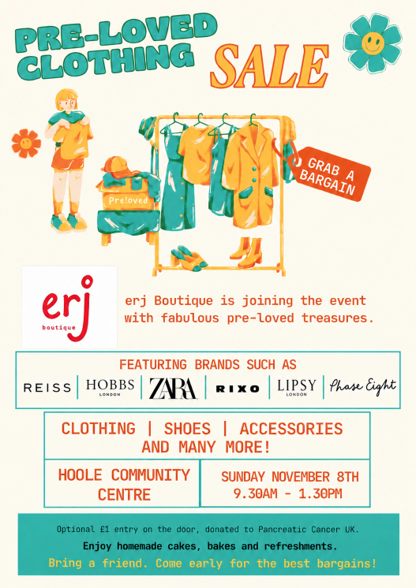
There will be clothing, shoes and accessories, with brands such as Reiss, Hobbs, Rixo, Lipsy, Phase Eight and yes, Zara. Buying a pre-loved Zara dress is a very different thing from buying a new one: it keeps a garment that already exists in use for longer. erj Boutique is joining with pre-loved treasures too, and there will be homemade cakes and refreshments.
Pre-loved Clothing Sale
Sunday 8 November, 9.30am to 1.30pm
Hoole Community Centre
Optional £1 entry on the door, donated to Pancreatic Cancer UK
Come early for the best bargains, bring a friend, and come and find our table for a chat about refill and reuse.
Make Do, Mend & Lend: repair is next
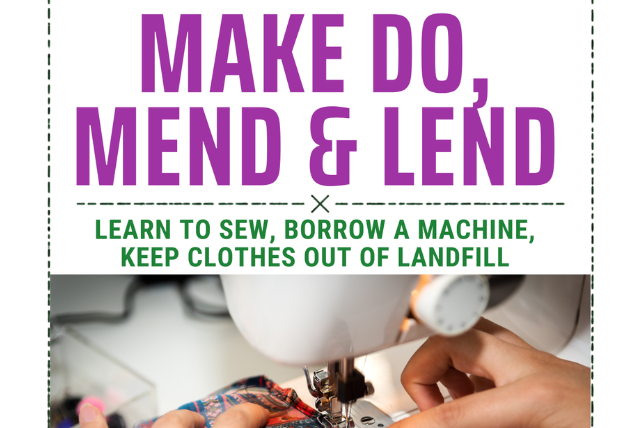
Buying second-hand is half the story. The other half is keeping the clothes we already own in use for longer. Many of us were never taught to sew a button or take up a hem, and too many clothes are thrown away for a small fix.
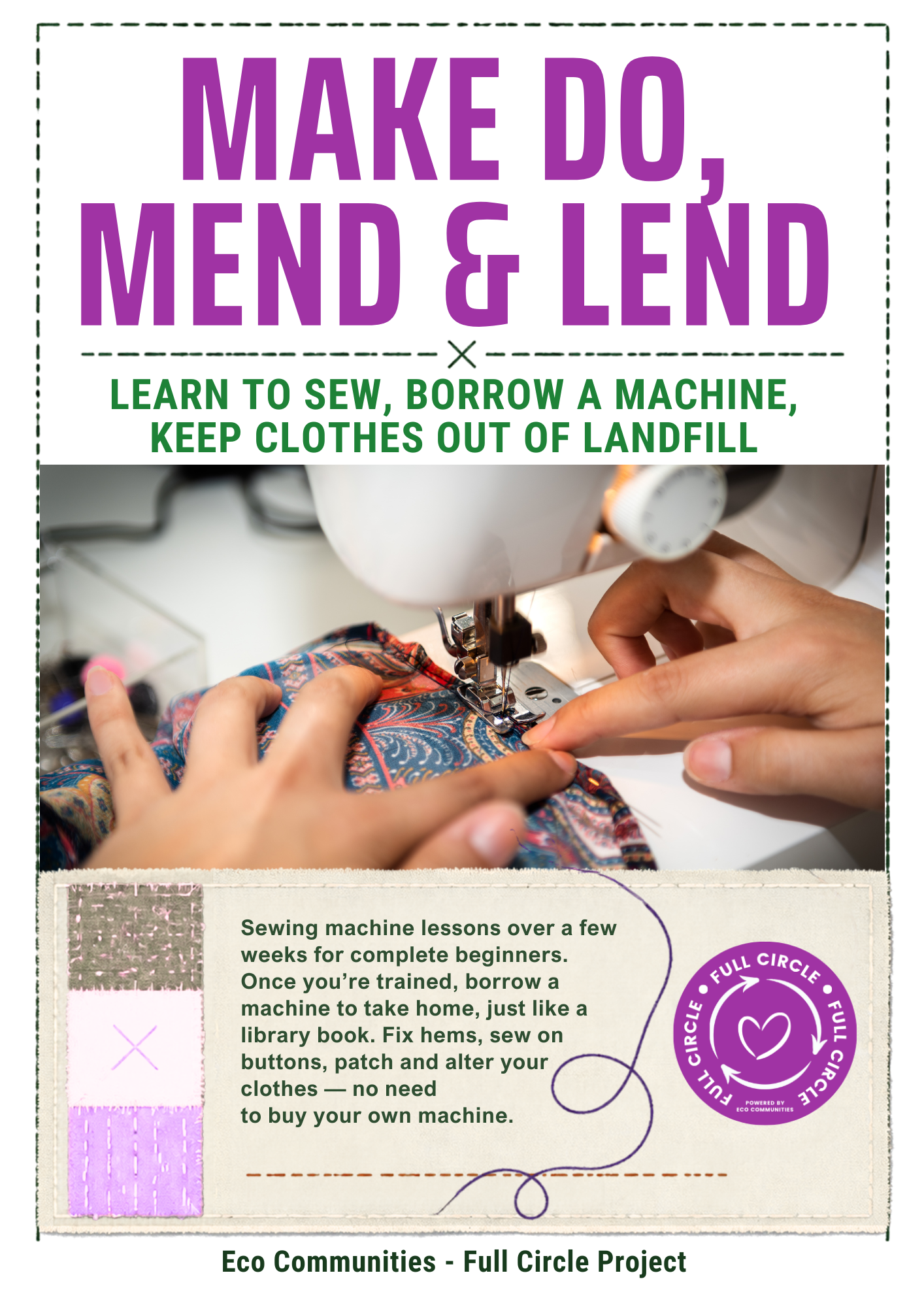
So we’re launching Make Do, Mend & Lend. Our sewing machine lessons run over a few weeks. Once you’re confident, you can borrow a machine, like a library book, rather than buying one just for the odd repair or alteration. Alongside that we’ve put together a home repair kit with a step-by-step guide to the basics.
Sign up with my on Sunday….
Five things you can do
- Buy less, and wear what you have more often.
- Shop second-hand first: charity shops, swaps, pre-loved sales and apps.
- Keep clothes out of the supermarket trolley.
- Repair before you replace. Join us for Make Do, Mend & Lend.
- Check Ethical Consumer’s ratings before buying new.
See you on Sunday.
Helen