Heat, The Rapture, and Why We Need to Talk About This More
Helen Tandy, Founding Director
We entered our fifth heatwave of the summer last week which started with me posting on LinkedIn about how the heat was affecting my health, and my worry about what rising temperatures will mean for my Fabry disease, year after year. That post had a huge response, far bigger than I expected. It seems I’m not the only one thinking about this.
Off the back of that, I’ve been reading about why the UK and Europe are set to suffer worse than most of the world, and binge-watching The Rapture on BBC One, a psychological thriller that, without meaning to, has ended up feeling like it’s telling today’s story back to us. This post pulls those three threads together.
The LinkedIn post
Today it’s warm again. For most people, that means shorts, gardens, maybe a barbecue. (from last week)
For me, it means lying down with cold wet flannels, unable to work, because I live with Fabry disease — a condition where heat intolerance isn’t a mild inconvenience, it’s genuinely unbearable pain.
I’m not writing this for sympathy. I’m writing it because I think we’re having the wrong conversation about “hotter summers.”
We talk about climate change in terms of degrees and decades. What we don’t talk about enough is what 30°C+ actually does to real people, right now:
- Your grandparent with a heart condition, whose heart has to work harder just to cool down
- Your child, whose body can’t regulate temperature as efficiently as an adult’s
- Your friend with asthma or COPD, breathing worse air on top of the heat
- Someone you know with diabetes, MS, kidney disease, genetic illness a mental health condition — all groups where heat measurably worsens symptoms
Around 17% of the UK population is currently classed as “vulnerable” to heatwaves. That’s likely an undercount — it doesn’t capture the full range of conditions heat affects, mine included.
Warm weather feels good for a lot of people. I understand that. But “normal” is shifting, and for a growing number of us — including people you love — that shift isn’t pleasant, it’s dangerous.
If you’ve got a parent, grandparent, or family member with a health condition, this isn’t a future problem. It’s already here.
That’s why I keep doing the work I do on climate and circular living, because adapting to this isn’t optional anymore, it’s necessary. For all of us.
Why the UK and Europe get hit harder
It isn’t your imagination, and it isn’t just a run of unlucky summers. Europe is heating up roughly twice as fast as the global average, and there are solid physical reasons why.
The planet as a whole is currently around 1.4°C warmer than pre-industrial levels. Europe is already about 2.4–2.5°C warmer — nearly double.
A few things are driving that gap:
- Land warms faster than sea. Oceans absorb and store heat and cool themselves through evaporation; land can’t do that as efficiently. Europe is a large landmass relative to its size, so it heats up quickly.
- Proximity to the Arctic. The Arctic is warming even faster than Europe, and that’s reshaping the jet stream — allowing “heat domes” and “omega blocks” (high-pressure systems that trap hot air like a lid) to stall over the continent for longer.
- Meltwater from Greenland is cooling a patch of the North Atlantic, which is bending the jet stream and effectively parking heat over Europe instead of letting it move through.
- Less snow cover and less air pollution than in the past — both used to have a mild cooling/reflective effect that’s now diminished.
The upshot: this summer’s heatwaves in the UK aren’t a one-off. Scientists are describing Europe as a “heatwave hotspot,” and the pattern is accelerating rather than levelling off.
What The Rapture gets right
The Rapture is adapted from Liz Jensen’s 2009 novel of the same name, written by Bryony Kimmings and Rebecca Manley, and filmed in Wales in summer 2025, during an actual heatwave, with the cast working in 33°C heat. It follows forensic psychologist Gabs Fox, newly arrived at a high-security psychiatric hospital, and her patient Bethany Krall, a teenager convicted of killing her mother who insists she can predict extreme weather events before they happen.
The novel builds towards a large-scale climate catastrophe. Kimmings deliberately moved away from that for the TV version, she’s said that seventeen years after the book was written, we now know too much about the real cost of continued extraction and growth to need a disaster-movie ending to make the point. Instead the story becomes something more personal: an investigation into whether Bethany really did what she was convicted of.
That choice is, in its own way, the argument of this whole post. We don’t need another apocalypse story to get people to care. What lands is heat as something that happens to a specific person, in a specific body, in a specific place, not a global abstraction.
The Rapture works because it’s grounded in that, and it’s landed in the UK during a summer where the fiction and the forecast look uncomfortably similar.
Breaking the spiral of silence
Here’s the thing that surprised me most thinking about the series, research and changes in politics in the UK. In my research I found that although roughly 89% of people globally want their governments to do more on climate. But most people wrongly assume they’re in the minority, so they don’t talk about it, don’t campaign on it, don’t necessarily vote on it.
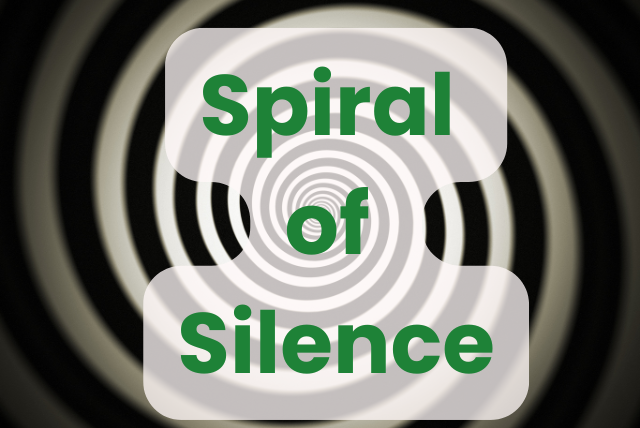
Researchers call this a “spiral of silence.” The support is real. It’s just quiet.
This isn’t just a hunch — there’s real psychology behind it. Before people speak up on a topic like climate change, they instinctively look for social cues about whether others around them share their view. If they sense that others disagree, they’re more likely to stay quiet. And that silence then reinforces the very belief that caused it, everyone assumes no one else agrees, even when that’s not true. Research by Nathan Geiger at Penn State found this holds up experimentally: people who were told others weren’t concerned about climate change became measurably less willing to bring it up themselves, even in small group conversations. It’s a genuinely self-reinforcing loop, which is exactly why it takes so little to break it. One person speaking first, one conversation in a space people already trust, can be enough to show everyone else in the room they were never really alone.
That’s fixable, and it doesn’t need a protest placard, it needs ordinary, regular conversation in spaces people already trust.
Some ideas of events where you can chat and actions you can take to spread the word:
I now host Chester People Planet Pint and about to co-host the new Chester branch of Better Business Network breakfast Chester.
- People Planet Pint — an informal, pub-based climate conversation with a genuinely low barrier to entry. No pitches, no panels, just conversation over a drink. These meet-ups run right across the UK and beyond — locally, Chester’s meets on the 3rd Thursday of the month, also Warrington, Alderley Edge and Macclesfield has its own local chapter too. See People, Planet, Pint – Sustainability Meetups Near You
- Better Business Network (BBN) breakfast — reaching the local business community, where climate is often framed as cost or risk rather than shared purpose. This is where the conversation needs to shift from “what will this cost us” to “what do we stand to gain by acting together.”
- Local repair cafés and refill events — these are action-based, so the conversation happens naturally alongside doing something. People talk more freely while they’re fixing a toaster or filling a bottle than they do in a room set up specifically to discuss climate. Chester, Helsby, Tattenhall and Macclesfield are ones I am aware about – let me know if you run one in the region.
- A new monthly Cheshire-wide online meet-up (more coming) to connect people already doing this work so it doesn’t stay siloed
- Simple “ask your candidate” toolkits ahead of local elections, parliamentary discussions — converts private support into a public, votable expectation,