Helen Tandy, Founding Director
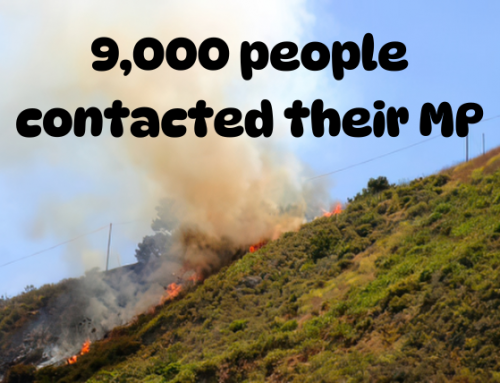
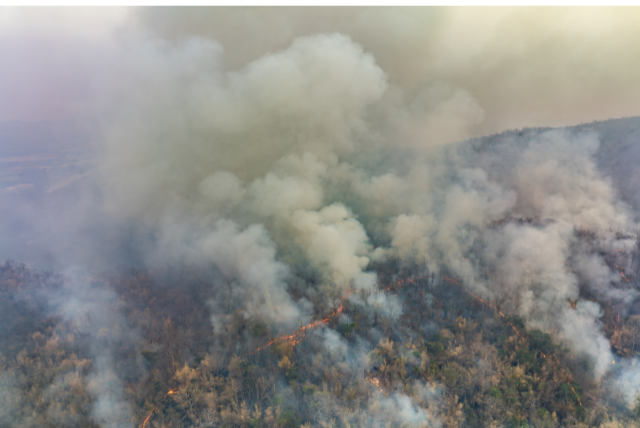
This summer, a major incident was declared in Suffolk as 90 firefighters battled a heathland blaze at Dunwich Heath. It’s one of several serious wildfires across the UK this year, against a backdrop the government itself is now calling a “new normal” of drought and extreme heat. Nearly 2,900 people are estimated to have died from heat-related causes in May and June alone — the UK’s worst toll since records began. Much of England is in official drought, and early harvest data shows most farms reporting wheat yields below average, with some crops not worth the cost of harvesting.
Most UK wildfires start through human action, accidental or deliberate — a dropped cigarette, a disposable barbecue, sometimes arson. That’s not in dispute. What climate change does is set the conditions once a fire is lit: prolonged heat and dry weather leave vegetation dry enough to burn for longer stretches of the year, and Met Office research found the severe UK fires of 2022 were made at least six times more likely by human-caused climate change, specifically because of how far and how fast they were able to spread once started. Someone may strike the match. Climate change decides how much it can burn.
This is not a future risk. This is this year.
So when, back in June, MPs voted 332 to 94 to pass the Seventh Carbon Budget (CB7) — a legally binding commitment to cut UK greenhouse gas emissions by around 87% by 2040, compared to 1990 levels — it should have felt like unambiguous good news. And in one sense, it is: it’s now law, not an ambition.
But I’ve been campaigning on this ground for over 20 years. And I have to be honest: it’s hard to feel triumphant about a legally binding target for 2040 while we’re already living through the wildfires, the heat deaths, and the failed harvests that scientists were warning us about decades ago. We needed this scale of commitment years ago. And even now that it exists on paper, 94 MPs voted against it, more open opposition to climate action than we’ve seen in a long time. That should worry all of us.
How many more summers like this one before “as soon as reasonably practicable” stops being an acceptable timeline?
What actually happened
MPs gathered in the House of Commons to debate CB7, which sets the UK’s emissions limit for the 2038–2042 period. After debate, the vote passed 332 in favour to 94 against — and it was approved on one of the hottest June days on record, which felt like a fitting, if slightly ironic, backdrop.
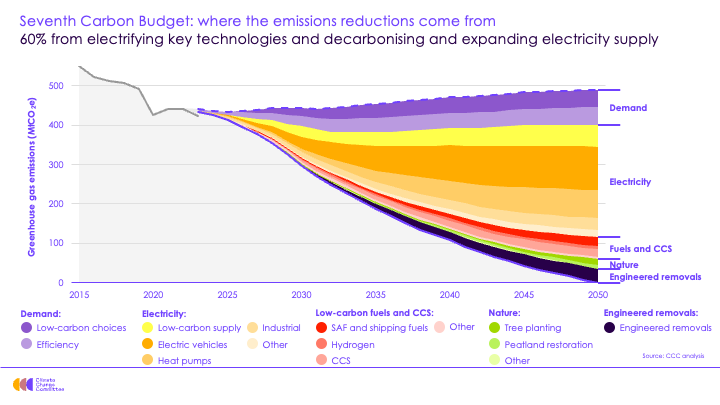
This isn’t the government simply picking a number it liked. The 87% figure comes from the independent Climate Change Committee’s advice, and — as has been the case for every carbon budget since the Climate Change Act 2008 — the government followed that advice. It means the policies that get built over the next few years, from home insulation schemes to renewable energy investment to how we get around, all now have to add up to hitting that number.
Why this matters for the work we do
At Eco Communities, we’ve spent years building the practical, local end of this: talking climate change, litter picks, refill hubs, reuse and repair culture, cutting single-use plastic out of daily life across Cheshire and beyond. That work matters on its own terms. But it also sits inside a much bigger picture, and CB7 is part of it. A legally binding national target means:
- More climate-supportive policy for years to come, this isn’t a one-parliament decision, it’s locked in.
- A stronger mandate for community-led circular economy infrastructure, refill networks, repair culture, local reuse schemes — because national delivery plans now have to move in the same direction to hit this number.
- A clearer, stronger case to make to councils and funders that this work isn’t a nice-to-have, it’s part of delivering a legal obligation the country has now signed up to.
The bit that should make us sit up
94 MPs voted against the budget — one of the highest levels of opposition any carbon budget has faced. That’s a real shift, and not a good one. Previous carbon budgets have passed with near-unanimous support (the original Climate Change Act was carried by everybody in the Commons except five people). Ninety-four is a very different number.
It tells us that climate action can no longer be assumed to be uncontested, cross-party common sense in Westminster. It’s becoming something that has to be defended, argued for, and won — again and again.
Thank you — genuinely
If you emailed your MP ahead of this debate, thank you. It’s easy to feel like one email doesn’t move anything, but MPs pay attention to volume. When constituents show up in numbers to say “this matters to us,” it changes the conversation in the room. You were part of why this passed.
So what do we actually do with this?
That frustration doesn’t mean giving up, it means being clearer than ever about what actually needs to happen next, on the ground and in Westminster.
What we’re doing locally: thinking circular, refill hubs, repair culture and reuse networks that cut demand and emissions right now, not in 2040, proof that community-led change doesn’t have to wait for national delivery plans.
What we need from politicians:
- A published, funded, fast-tracked delivery plan for CB7 — not just the target.
- Continued investment in home insulation and clean power, so the transition protects people’s bills, not just emissions figures.
- Honest recognition from every MP, whichever side of that 332–94 vote they were on, that food security and public health are now climate issues, not abstract ones.
We didn’t get here by accident, and we won’t get out of it by accident either. Twenty years of campaigning has taught me one thing: the people who keep showing up are the reason anything moves at all. That’s still true today.
If you want to keep making your voice heard on issues like this, staying in touch with your local MP is one of the simplest, most effective things you can do — and clearly, it works.