Stand at your bin on a Sunday night and really look at what’s in your hands.
Not what came into your home this week — what’s leaving it.
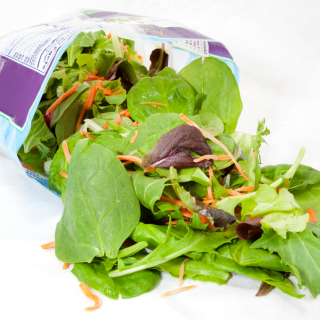
Most of us, if we’re honest, would find roughly the same things. A salad bag that never quite got used. Some bread that went stale before we got to it. Packaging from things we ordered online, already destined for the recycling box before we’d even finished unboxing them. A few items of clothing bundled into a bag for the charity shop. Something broken that we kept meaning to fix. You are not alone I am as guilty as everyone but I am trying to change.
Week after week, the same quiet outflow.
And yet most of us are simultaneously trying to spend less, own less, feel less overwhelmed. We’re buying organisational boxes to manage the clutter while more things arrive to fill them. We’re throwing away food while also worrying about the cost of the weekly shop. We’re exhausted by the volume of stuff in our lives and somehow the volume keeps growing.
This isn’t a personal failing. It’s a design problem.
Modern homes were built to be consumption endpoints. Things come in through the front door and waste goes out through the back. The whole system — supermarkets, packaging, online shopping, fast fashion, planned obsolescence — is designed around that single direction of flow. Nobody designed your kitchen to make it easy to use up what you already have. Nobody designed your wardrobe to make repair feel more satisfying than replacement.
And the cost of all this isn’t just environmental, though it is that too. It’s the money quietly disappearing from household budgets on duplicate purchases and forgotten food. It’s the mental load of managing too much stuff in too little space. It’s the strange exhaustion of a home that never quite feels calm, no matter how much you tidy it.
Food waste is perhaps where this hits hardest. Most of us don’t waste food because we don’t care, we waste it because modern life is fragmented, busy and designed around convenience rather than planning. The supermarket is open at 10pm. The portion sizes are set for someone else’s household. The best before dates are cautious to the point of absurdity. We’re buying for a version of the week we hoped to have, not the one we actually live.
Then there’s everything that arrives already designed to leave. The plastic tray. The delivery box. The refill bottle we buy again and again because the refill option isn’t quite convenient enough. We bring it in, find somewhere to store it briefly, and then pay — through council tax, through time, through environmental cost — to have it taken away.
The strange thing is that most of this could be different. Not through individual perfection, but through communities functioning a little less like collections of isolated households and a little more like the interconnected systems they used to be. Shared food skills. Repair knowledge passed between neighbours. Refill options that actually work because enough people use them. Tools borrowed rather than bought. Surplus shared rather than binned.
Not radically. Not perfectly. Just more consciously.
That’s the thinking behind a new community workshop I’m running this June as part of our recent Full Circle Spacehive Funder.
What Leaves Your House Every Week? The Full Circle Home Reset is a relaxed, practical community conversation exploring food waste, packaging, household costs, clutter and the quiet pressures of modern home life — and what it might look like to do things differently.
This isn’t about guilt or green perfection. It’s about stepping back, looking honestly at the systems we live inside, and finding practical ways to live with less waste, less stress and more connection to the people around us.
Come for the conversation. Stay for the tea.
23rd June – BOOK
[Venue in Chester tbc]
Book your place now – places are limited.