Helen Tandy, Founding Director
Last week, more than 300 people came together at a Circular Economy conference in Birmingham with a shared question: how do we move faster from a throwaway culture to one that values resources, skills and people?
What stood out wasn’t just the scale of ambition, but the growing sense that the circular economy is no longer a niche idea. It’s becoming something tangible, shaped by policy, powered by businesses, and brought to life by communities like ours.
Designing connection, not just content
The event itself reflected circular thinking. Instead of back-to-back presentations, the day was built around interaction and exchange. Four themed zones — Future, Circular Growth, Circular Skills and Co-Creation, allowed people to dip into what mattered most to them.
Even travel choices were part of the picture, with organisers gathering feedback to inform carbon footprint planning. It was a subtle but important reminder that how we do things matters just as much as what we talk about.
The West Midlands: a circular economy in action
West Midlands Mayor Richard Parker spoke about the region’s ambition to become a national leader in circular economy innovation, and the progress already underway.
More than 200 local businesses are actively reducing waste, cutting costs and lowering carbon emissions with support from the West Midlands Combined Authority. Alongside this, community repair initiatives in places like Sandwell and Birmingham are helping people fix, reuse and upcycle everyday items, reducing waste while building skills and connection.
One standout example was a project at Birmingham Energy Park recycling critical battery materials, directly linking circular economy thinking to electric vehicle supply chains and regional resilience.
The message was clear: collaboration is essential. Government, businesses and communities all have a role to play — and local insight is vital in shaping the policies that make circular solutions viable at scale.
Policy is catching up — and that matters
From a national perspective, DEFRA’s Deputy Director Nicola Hopley outlined how the UK Government is embedding circular economy principles into policy through the forthcoming Circular Economy Growth Plan.
The focus is on making products more durable, repairable and recyclable, and on making reuse and refurbishment easier and more affordable for consumers.
Some of the figures shared were stark:
-
Around £27 billion is lost every year in the UK through wasted food, clothing and electricals
-
Families lose roughly £1,000 annually through food waste alone
-
Packaging reforms are expected to create 25,000 jobs and stimulate billions in investment
Policies such as Extended Producer Responsibility are shifting the cost of waste away from taxpayers and onto producers, incentivising better product design from the outset. Meanwhile, measures like the ban on disposable plastic vapes show how regulation can quickly reduce waste at scale.
But speakers were clear that policy alone won’t deliver change. Skills gaps, infrastructure challenges and funding barriers remain, which is why collaboration across sectors, and investment in local solutions, is so important.
When circular economy becomes real: reuse hubs in action
One of the most energising moments of the day for me came during a workshop titled “Who makes a Reuse Hub work?” — a practical session focused on mapping the people, skills and systems needed to make reuse hubs successful.
This is where theory met reality.
The workshop featured input from Emma Porter and the team at The Rebuild Site(a Community Interest Company just like Eco Communities) — a brilliant reuse and reclamation project based in Carlisle. Their work shows what’s possible when building materials are treated as valuable resources rather than waste, and when communities are trusted to lead practical solutions.
The session sparked big ideas, including what a fully-formed vision of a reuse hub closer to home, might look like complete with circular building-waste systems and a (jokingly appointed) warehouse manager of my husband.
But the humour sits alongside something serious: reuse hubs work. They reduce waste, cut carbon, create jobs, support skills development and keep value circulating locally. Projects like The Rebuild Site demonstrate that circular economy principles can be embedded in everyday infrastructure, not just policy documents.
Circular success stories already delivering impact
Across the morning sessions, multiple real-world examples reinforced this point:
-
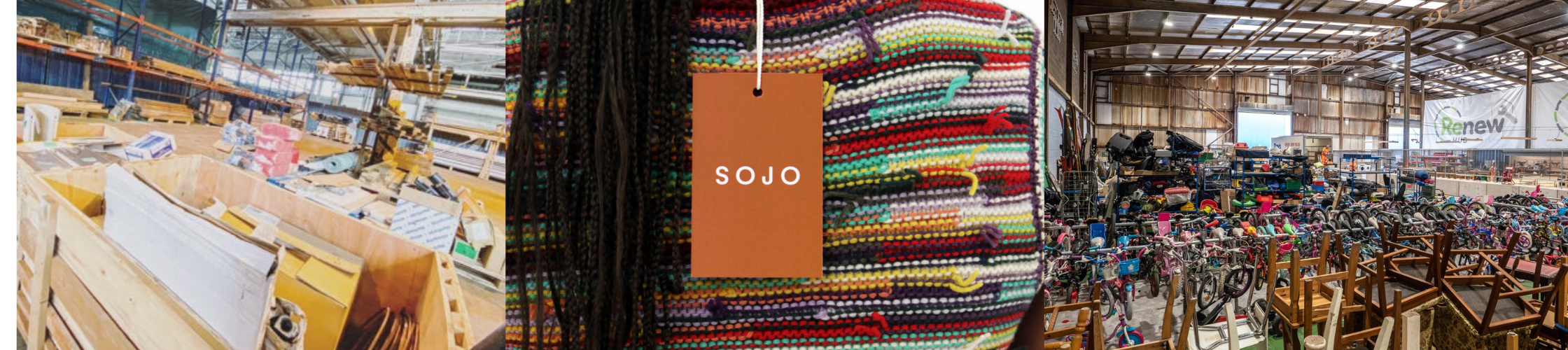
A renew hub in Greater Manchester refurbishes donated goods, generates income for charities and supports green jobs
-
A foundry business saves money and reduces emissions by reusing waste sand instead of sending it to landfill
-
Fashion rental platforms are extending the life of garments, saving consumers money and reducing demand for new production
-
In the West Midlands, industrial symbiosis projects are connecting manufacturers and construction firms to exchange surplus materials
These aren’t pilot projects. They’re working models — delivering environmental, social and economic benefits right now.
Why this matters for eco communities
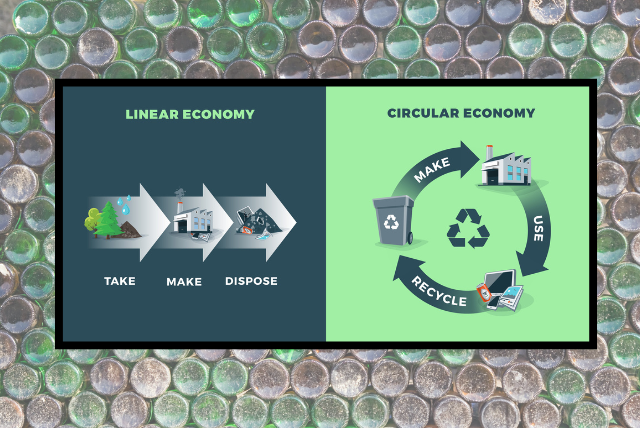
A consistent theme throughout the conference was that the circular economy is about more than waste. It’s about value, valuing materials, skills, time and people.
For eco communities, this translates into:
-
Local jobs and training opportunities
-
Lower household costs through reuse and repair
-
Stronger, more resilient local economies
-
A sense of agency and hope in the face of climate challenges
The West Midlands is showing what’s possible when leadership, policy and community action align. But the opportunity is everywhere, including here in Cheshire West and Chester — if ideas are properly supported and funded.
The circular economy isn’t a distant concept. It’s already visible in repair cafés, reuse hubs, reclaimed materials and shared resources.
And with the right support, there’s plenty more to do — and we’re up for it. ♻️🌱
We are already growing our Refill and Reuse projects — from household liquids to event and party kits — and we’re exploring what a Library of Things could look like locally. We also want to expand opportunities for people to repair, repurpose and share clothes, building practical skills alongside community connection.
We currently have three repair cafés in the region, all run by dedicated volunteers from groups like Transition Tattenhall, Friends of the Earth and more. They are brilliant examples of what communities can do, but they also highlight a hard truth. Some parts of the circular economy cannot, and should not, rely solely on volunteer goodwill.
If repair, reuse and sharing are to become mainstream — not niche — they need to be treated as viable business models and essential local infrastructure. That means initial and transitional funding that allows people to be paid fairly for their time, skills and coordination work, while services embed themselves and develop sustainable income streams.
This isn’t about replacing community energy, it’s about supporting it properly. With the right investment, repair and reuse can create local jobs, keep money circulating in our communities, reduce waste at scale and make circular living accessible to more people.
The ambition is there. The models are proven.
Now we need the funding structures to catch up.
Additional Reading- Business Examples
The Renew Hub — industrial-scale reuse and resale
Based in Greater Manchester, the Suez Renew Hub operates on a 5,000 m² site where donated goods are repaired, refurbished and resold through physical stores and an online shop. It has created jobs and diverted large volumes of goods from waste streams. Suez working with Greater Manchester Combined Authority has created a structure which creates money which can support local charities and has created 20 green jobs so far.
Sojo — fashion repair platform
Founded in London to make clothing repair accessible via an app, Sojo connects customers with local seamsters and couriers and takes a commission on jobs. It has secured external investment (£300k pre-seed) and partnerships with major brands. Marks & Spencer, a mainstream UK retailer, has partnered with Sojo to offer clothing repair services to its customers, starting at just £5 — commercially scaling repair beyond niche markets. Sojo has 20 staff working in London.
Crown Workspace Ltd — furniture reuse & refurbishment
Back in 2013, Premier Moves (now Crown Workspace), a relocation company noticed that tens of thousands of items of workplace furniture were going to landfill with no consideration of the wider environmental impacts. Yet, an increasing number of their clients were expressing an interest in more sustainable options. Applying the principles of the waste hierarchy, Crown investigated the reasons why high-quality office furniture was being discarded. They found that many items were being discarded due to aesthetic preferences or sizing issues, leading to unnecessary waste.
Crown introduced repair and resizing capabilities to extend the life of these assets. They began refurbishing furniture either for their original client or reselling it to others. At first, the company began manually remanufacturing desktops, but the process lacked precision and consistency. While the demand for this service was growing, it became clear that a more professional solution was required. As there were no existing examples of workplace furniture remanufacturing to replicate at the time, it was necessary to innovate! With a £50,000 WRAP grant in 2013, Crown Workspace invested in a CNC machine, transforming its ability to remanufacture office furniture with precision and efficiency. Crown Workspace has saved over 125,000 office items from waste, avoiding 7,100+ tonnes of CO₂e.