You know the drill: you order something online, maybe clothes in two sizes, a gadget you’re unsure about, or bits and pieces for a gift. You click “Buy,” then maybe later “Return.” It feels harmless: free delivery, free returns, easy refunds. But behind that convenience lurks a growing environmental and ethical problem, and a recent piece of reporting makes the scale painfully clear.
What We Learned from Amazon Returns
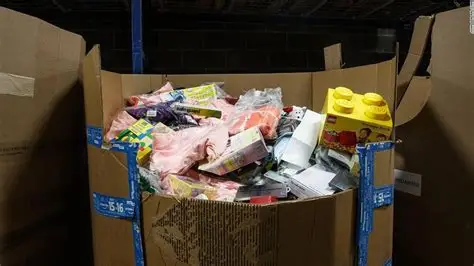
A recent article in The Times recounted what a buyer found when he bought a “mystery pallet” of returned goods originally sold by Amazon. The haul — a half-tonne of mixed, often odd items — included everything from massagers to kitchenware to clothes, many of which appear never to have been used.
Why does this matter? Because it shows how many “returns” don’t actually go back to being resold to a new customer, but instead end up as surplus — destined for liquidation, disposal, or to quietly fade into landfill or waste-streams. The scale of such returns hints at a systemic waste problem hidden behind every “free return” policy.
Why Online Returns Are Environmentally Expensive
-
More packaging waste: Online orders already tend to use far more packaging — boxes, plastic sleeves, bubble wrap, than in-store purchases. When items are returned, many need re-packaging, adding even more waste.
-
More carbon emissions: Returns mean extra transport, items travel to you, and then often back to warehouses or logistics hubs. That doubles the emissions associated with the delivery.
-
Products going unused or destroyed: Many returned items, even unopened ones — are never resold. In some cases they are liquidated, scrapped, or thrown away.
-
The illusion of zero-cost for the consumer hides the real cost for the planet: Because returns are often “free,” it encourages over-ordering (multiple sizes, colours, versions) or impulse buying with little commitment, behaviour that fuels waste and over-consumption.
The Broader Problem: Convenience vs Sustainability
Online shopping transformed our consumer world: convenience, speed, vast choice, and flexibility, including the safety net of easy returns — have made it the dominant mode for many. But that convenience comes with environmental and systemic costs rarely visible to buyers.
Lenient return policies, mass-delivery networks and the disposability of products all reinforce a throwaway culture.
What’s more, companies sometimes find it cheaper to dispose of returned items than to inspect, repack or resell them, especially when items are clothes (which may have been worn), electronics (which may need cleaning/data wiping), or bulk-ordered miscellaneous goods.
What Can We Do — As Consumers, and as a Society
-
Order consciously: Before clicking “buy,” ask yourself: Do I really need this? Am I buying multiple sizes just to pick one? Could I find it locally instead?
-
Try to minimise returns: Pay attention to size charts, reviews, detailed product descriptions. If you need to return — maybe donate the item to someone who actually wants/needs it, rather than contribute to waste or liquidation.
-
Support more sustainable retailers: Look for retailers who offer minimal packaging, transparent disposal/return policies, or even circular-economy options (refurbished, re-used, low-waste).
-
Push for systemic change: Governments, regulators and retailers should be encouraged to rethink “free return” policies, consider environmental costs, and develop sustainable practices — especially in managing returns responsibly (reuse, recycling, resale, repair).
-
Shift consumer mindsets: Ultimately, the easiest way to reduce waste is to buy less — and buy with intention. The fewer items we order just to return, the less waste we create.
Conclusion: Convenience Comes at a Cost
The story about Amazon returns is more than a curiosity. It’s a wake-up call. The “buy now, return later” culture may feel low-stakes for us, but in aggregate, across millions of orders, it adds up to significant waste, emissions, and environmental damage.
If we care about sustainability, the planet, and our shared future, maybe the next time we hurry to hit “Place Order,” we pause — consider whether we truly need it. Because the true cost of convenience shouldn’t be paid by the earth.