Heating our homes is one of the UK’s biggest climate challenges. Around 18% of Britain’s greenhouse gas emissions come from home heating, largely because most households still rely on gas boilers. Around 85% of homes are heated by gas, which makes the shift to cleaner heating a major part of the UK’s net-zero plans.
One of the government’s main solutions is the installation of electric heat pumps. These systems capture heat from the air, ground or water and use it to warm homes. In theory they are highly efficient and can significantly reduce carbon emissions.
However, uptake has been slow. Out of roughly 28 million homes in the UK, only about 260,000 had installed heat pumps by early 2025, even though government grants of up to £7,500 are available.
There is also debate about how well they work in practice. Some households report higher running costs or problems with poorly installed systems. A survey of 1,000 heat pump owners found two-thirds said their homes had become more expensive to heat after installation. Experts say this often reflects issues with installation or system design rather than the technology itself.
From a scientific perspective, heat pumps are remarkably efficient. Because they move heat rather than generate it, they can deliver several units of heat for every unit of electricity used.
The bigger challenge may actually be the cost of electricity in the UK, which is among the highest in the world. As heating and transport move towards electrification, the country will need far more power, potentially three times current electricity use in the coming decades.
For communities thinking about low-carbon heating, the debate highlights an important point: technology alone isn’t enough. For climate solutions to work at scale, they also have to be affordable, well-installed and supported by energy systems that make clean choices the cheapest ones.
Want to know more?
If you’re interested in low-carbon heating or considering a heat pump, these organisations provide clear and reliable information:
-
Energy Saving Trust – Independent advice on home energy efficiency, heat pumps and grants.
- Citizens Advice – Is a heat pump right for you?
These organisations publish evidence-based research, practical guidance and case studies about low-carbon heating and home retrofit.
What grants are available?
The main government support for low-carbon heating in England and Wales is the Boiler Upgrade Scheme.
-
Up to £7,500 towards installing an air-source or ground-source heat pump.
-
The grant is applied up-front by the installer, reducing the price you pay.
-
Available for homeowners and landlords replacing fossil-fuel heating systems such as gas or oil boilers.
-
Installations must be completed by an MCS-certified installer.
The scheme runs until 2028 and is designed to make low-carbon heating more affordable as the UK moves toward net-zero emissions.
Because grants and eligibility rules change, it’s usually best to check with the Energy Saving Trust or your local council retrofit programme for the latest options.
Merseyside and Cheshire: visit Energywise or call 0808 196 8268
✅ Community tip:
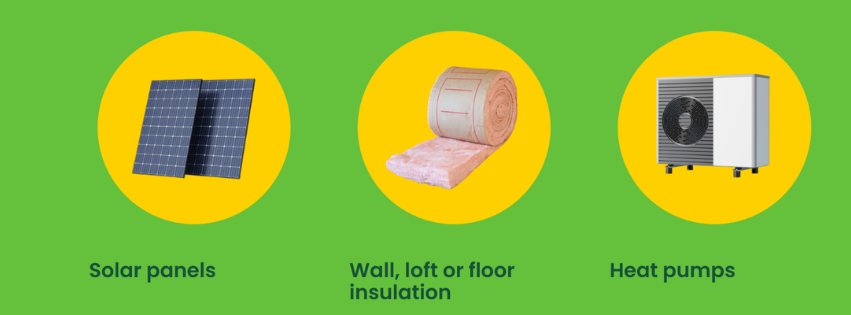
Before installing a heat pump, experts recommend improving insulation and energy efficiency first. A well-insulated home will need a smaller system and run much more cheaply.
“Evidence from projects in Manchester, Cornwall and London suggests that tackling housing emissions may work best when communities act together — street by street — rather than leaving individual households to navigate the transition alone.”
Many experts now think community-scale retrofit is one of the most effective ways to decarbonise housing, because it lowers costs, builds local skills and encourages more people to participate.
More reading below: here are some useful examples.
1. Manchester – “People Powered Retrofit”
One of the most well-known UK community models is People Powered Retrofit, run by the social enterprise Carbon Co-op in Greater Manchester.
-
It helps homeowners plan and carry out whole-house retrofits (insulation, ventilation, solar, heat pumps).
-
The model uses trusted local networks and community engagement to encourage residents to act together.
-
It also works to train local builders and suppliers, creating local green jobs.
The project shows how neighbourhood-based approaches can create a local market for retrofit rather than relying on national schemes alone.
2. Cornwall – community retrofit and advice networks
In Cornwall and Devon, community energy groups have worked together to help households retrofit their homes.
Programmes include:
-
Low-carbon home visits
-
Advice on insulation, solar panels and heat pumps
-
Low-interest loans and retrofit support
These programmes share local case studies of homeowners upgrading their houses with insulation, solar panels and heat pumps, showing how communities can encourage others to follow.
3. Becontree, London – neighbourhood “net-zero homes”
A pilot project in the Becontree estate is testing what a net-zero neighbourhood could look like.
Around 50 homes are being upgraded together, with measures including:
-
solar panels
-
battery storage
-
heat pumps
-
electric vehicle charging
The idea is to combine retrofit, renewable energy and community participation to deliver warmer homes and lower energy bills.
4. Nottingham – large-scale retrofit programmes
Some UK cities have attempted neighbourhood-scale retrofits through partnerships between councils, energy companies and community groups.
For example:
-
Nottingham’s deep retrofit programme
-
external insulation panels
-
improved ventilation
-
solar power and heat pumps
These programmes aim to bring homes close to zero-energy standards while reducing disruption and costs by upgrading many homes together.
5. Hockerton – a small pioneering eco-community
A well-known early example is the Hockerton Housing Project.
This small community of five homes was designed for low-carbon living, using renewable energy, efficient building design and shared approaches to land use and transport.
Although it was built from scratch rather than retrofitted, it helped demonstrate how community planning can drastically reduce household emissions.
✅ Key lesson emerging from these projects
Researchers and policymakers increasingly argue that street-by-street or neighbourhood-scale retrofit works better than leaving households to act alone. Benefits include:
-
lower installation costs
-
trusted local advice
-
shared contractors and supply chains
-
stronger community engagement
-
faster carbon reductions